

Don't you just hate it when you are trying to wash dishes and the water won't drain? Or maybe you are just trying to properly wash your vegetables before cooking and nasty water keeps rising up in your sink. No matter what you are doing, clogged sinks just suck! No matter how hard you try, eventually, your sink is going to get clogged. But that doesn't automatically mean you need to call Cooper's Plumbing just yet. There are a few things you can try to get those drains flowing smoothly once again.
What Causes a Clogged Kitchen Sink
Kitchen sinks are usually the most used sinks in our homes and they definitely take some abuse. And if you have a garbage disposal, even more scraps go down the drain and can cause some major problems. Here are some of the usual suspects that cause kitchen sink clogs.
- Grease - NEVER pour grease down your kitchen sink. Grease clings to your pipes when it cools and over time, will form a thick layer that can constrict the pipes and stop them from flowing properly. Just as grease from those delicious double cheeseburgers clogs our arteries, it does the same to our drain pipes in our kitchen sink.
- Food Waste - It's practically unavoidable no matter how hard we try, but food waste is a very common cause of a clogged kitchen sink. Starchy foods like beans, pasta, and rice can build up on the pipes. Try using a mesh drain cover to help catch more food waste from ever getting in your pipes.
- Mineral Build-Up - Minerals from hard water may build up and cause a blockage over time.
- Small Objects - Don't you hate watching your ring swirl around the drain and falling in just before you can grab it. Small items like toys, rings, bottle caps, etc. can easily get stuck in your pipes causing a clog.
- Liquid Drain Cleaners- One of the common items that we often turn too, liquid drain cleaners, can actually make a clog worse. They can turn a clog into a more solid blockage making your problem even worse.
- Animal Based Soaps- Soaps made from animal fat, much like grease, can build up in your pipes causing a clog.
Fixing a Kitchen Sink with Standing Water in 5 Steps or Less
So your sink is clogged, you've got company coming, and you want to avoid having to call one of our plumbers. No problem, let's see if we can help unclog that kitchen sink and save dinner plans with these 5 easy steps.
Step 1: Clear the Debris
The first thing you want to do is remove any debris that may be clogging the drain holes. Sometimes food debris can block the holes in your drain cover causing water to drain very slowly or even stop draining completely if there is enough. Slide on a pair of rubber gloves and carefully remove any food or debris that may be blocking the drain. If this didn't help much or even none at all, move on to step 2.
Step 2: Remove the Water
Since step one didn't help, we need to remove the standing water in the sink manually. To do this, grab something to scoop water like a plastic cup. With the water gone, see if there is any debris that you may have missed. If there is, pop those gloves back on and remove any food or debris that you can with your hand.
Step 3: The Plunger

The plunger is a plumber's best friend, but they are not all made the same. There is a difference between a sink plunger and a toilet plunger. So don't go grabbing that toilet plunger because, well, that's just nasty. A sink plunger has a closed bottom with a smaller hole to fit in the drain.
Put the tip of the plunger in the drain hole to create a suction and push the handle up and down several times. You may be able to hear a difference in sound when the drain clears. Run a little water and see if it drains. If it doesn't repeat with the plunger. If the water drains, then the blockage is gone. If it doesn't, then we are going to have to try the next step.
Step 4: Removing the P-Trap
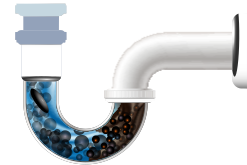
"P-trap? What the heck is a p-trap", you may be saying. Don't worry; it's not as intimidating as it may sound. The P-Trap is the curved pipe under the sink. Often, this is where clogs happen. Grab a bucket, or deep container, and place it under the pipe. Using channel locks, loosen the connectors. Water and debris may come rushing out, so this is why we need that bucket. Once you have removed the P-Trap, rinse it out thoroughly and then reinstall it. Once reinstalled and with the bucket still in place, run some water into the sink and see if everything is draining properly. Be sure to check your P-Trap to make sure you don't have any leaks.
Step 5: Using a Drain Snake
If the P-Trap method didn't resolve the clog, then that means the clog is located further down the drain. In order to reach it you will need a special tool called a drain snake. Don't worry, it doesn't bite. Remove the P-Trap once again and with the bucket still in place, run the metal cable from the drain snake into the pipe leading away from your sink. Once you feel resistance, rotate the snake against the blockage. The hook end of the cable should attach to the debris or tear it apart. If it is attached, the object should pull out when you retrieve the cable. Reinstall the P-Trap and run warm water down the drain to flush any remaining debris.
Nothing I Tried Worked to Clear the Kitchen Sink Clog...
If all of these steps fail, don't feel bad. That's where Cooper's Plumbing comes to the rescue. Give us a call or message us from our contact page and one of our professional plumbers will come out and get those drains moving right again.